

AffynityAI Review 2026: Worth It or Hype? (Quick Verdict)
AffynityAI Review is being sold on a very specific promise.
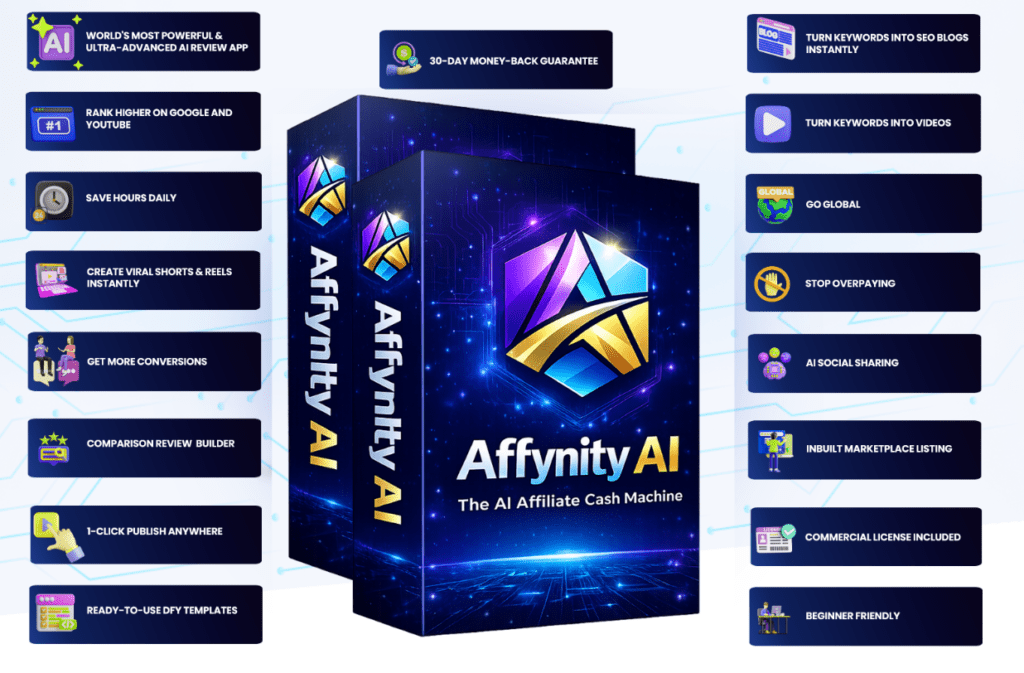
1 click and you get the whole stack. A blog review post, a review video, a handful of “viral” shorts, plus SEO fields, plus affiliate link placements, plus publishing and sharing. All from one dashboard.
That’s the pitch. And yeah, if you’ve ever tried to keep up with reviews across WordPress + YouTube + Shorts + TikTok while also making sure your links track properly, you can feel why this kind of tool is even a thing.
This review is not me repeating the sales page slogans. I’m going to focus on:
- who it’s actually for
- what it actually does (and what it does not do)
- pricing and the OTOs
- whether the “one time” deal makes sense in 2026
Quick verdict framework:
Worth it if…
- you publish review content frequently and you want one place to generate blog + video + shorts without juggling five tools
- you’re fine editing and verifying AI output before you publish
- you mainly need structure, speed, and consistency (not “I tested this for 30 days” depth)
Not worth it if…
- you expect instant rankings, instant virality, or “no editing needed” to be real
- you’re in a strict accuracy niche (finance, health, legal) and don’t have expert review
- you hate template style content and want a highly distinctive brand voice every time
Pricing starts around $14.95 for the front end during launch promos, which can be found here, and there are optional upgrades (OTOs). I’ll break those down later.
Important note: I’m working from the product positioning and the provided pricing/bonus details in your outline. Always confirm current limits, supported platforms, and what “one time” includes on the checkout page because these launch tools change fast.


What AffynityAI Is (And What It’s Trying to Replace)
In plain English, AffynityAI is an all in one AI review and content system.
You put in a product name or a keyword, and it tries to generate a full review “asset pack”:
- SEO blog post (review style)
- YouTube style review video content (typically script and maybe storyboard style sections)
- Short form snippets for TikTok, Instagram Reels, YouTube Shorts
- Comparison reviews like A vs B blocks
- Affiliate links placed automatically (you still need to provide your links, IDs, or network details)
- and then a layer of publishing and sharing
The bigger idea is what it’s trying to replace.
Because the normal stack for this stuff looks like:
- AI writer (or prompts in ChatGPT/Claude)
- SEO plugin (RankMath, Yoast, etc)
- a video tool (editing, captions, stock, voice, templates)
- scheduler (Buffer, Metricool, etc)
- social posting
- link tracking and UTM management
- plus a spreadsheet to keep you sane
AffynityAI is positioned like: “stop duct taping all that together.”
Core output types it keeps talking about:
- SEO blog posts
- Review videos (YouTube style)
- Shorts/Reels snippets
- A vs B comparisons
It also leans into two angles that are kind of classic in these 2025 to 2026 launches:
- Commercial license so you can sell this as a service
- Marketplace listing where you can list or sell “review bundles” (potential upside, but it depends entirely on whether that marketplace has real buyers)
You’re like this : Free Magnet Bot Review: Build a 7-Figure Online Business Using the Power of FREE?
The 2026 Context: Why AI-Generated Reviews and Shorts Are Everywhere
This isn’t happening because people woke up and decided they love AI.
It’s because buyer behavior changed, and creators are just chasing attention the same way they always do.
Most buyers now want:
- quick comparisons
- fast “is this worth it” verdicts
- visual proof or at least a confident walkthrough
- something they can watch while they’re half distracted
And creators need:
- volume
- consistency
- multi platform output
The bottlenecks AffynityAI claims to solve are real bottlenecks:
- writing and editing takes time
- video production is friction heavy
- SEO is annoying and easy to mess up
- publishing everywhere feels like doing chores
Also, pricing pressure is real. A lot of decent tools sit at $99 to $299 per month once you combine writing + SEO + video + scheduling. So a “$14.95 one time” offer gets attention. Even if it’s just to test.
But here’s the part people miss.
In 2026, platforms are also more aggressive about low value content. If your review is generic and looks like it was stamped out, you can get suppressed or just ignored. AI makes volume easier, sure. It also makes sameness easier. That’s the trade.
How AffynityAI Works (The 3-Step Workflow)
Most of these tools follow the same basic workflow, and AffynityAI is presented as a 3 step system.
Step 1: Enter the product name or keyword (maybe URL) and pick a template
You type in something like:
- “AffynityAI review”
- “best wireless earbuds under $50”
- “Product A vs Product B”
- or a specific brand model
If URL input is supported, that can help anchor details. But you still should not assume it “reads” a sales page accurately without errors. Always verify.
Step 2: AI generates the content pack
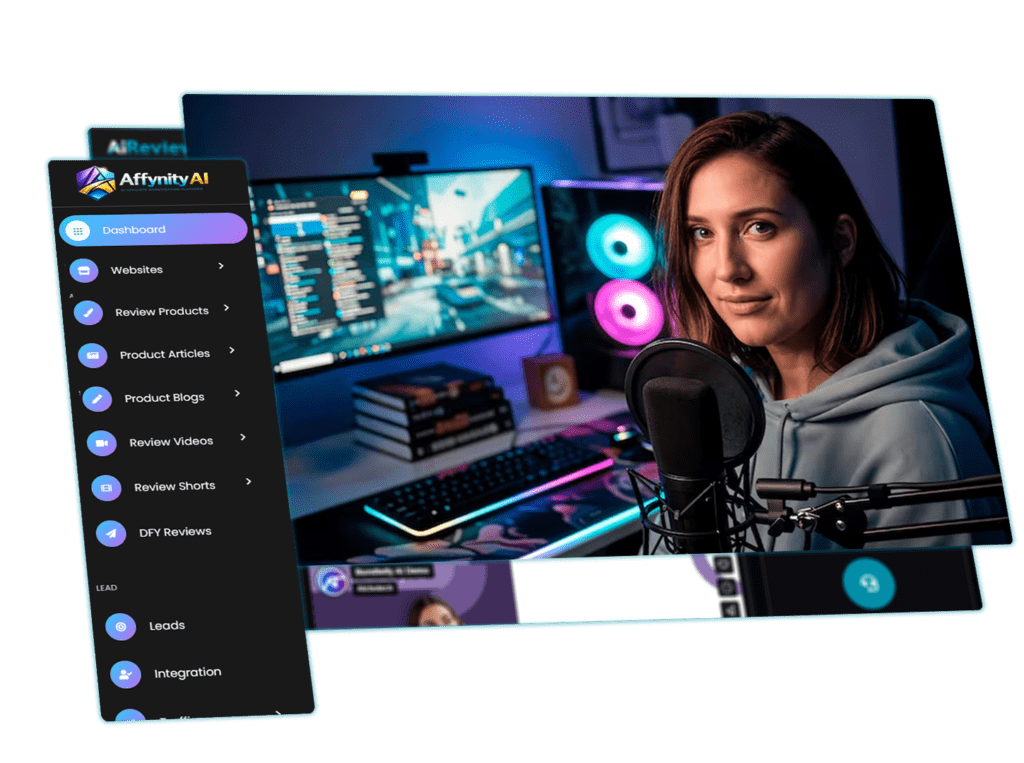
This is where it tries to output:
- blog review post (with sections)
- video script (hook, body, CTA)
- shorts scripts or captions
- comparison blocks
- SEO fields (title, meta, keywords)
- affiliate placements
This is the moment you need to watch for the gap between “generated” and “publishable.”
Because AI will confidently output things like features, pricing, or claims that are outdated or flat wrong unless it’s anchored to reliable inputs. And even then, it can still miss nuance.

Step 3: Publish/export/share
The product positioning suggests exports or publishing options like:
- WordPress
- Medium
- YouTube (video script use, or direct integration depending on actual feature set)
- TikTok (shorts content)
- social sharing options
- possibly scheduling campaigns
This is where the difference between a nice demo and real workflow shows up.

What I would verify during real use:
- Can you edit everything easily before publishing?
- Are formats correct for each platform? (shorts length, captions, hashtags, etc)
- Are affiliate links placed where you want them?
- Does it add disclosure text automatically, and is it editable?
- Does the output feel unique enough to not look like AI sludge?
You’re like this : OmniVisual Review : 7 Mind-Blowing Benefits of This Next-Level AI Visual Engine
What You Actually Get Inside AffynityAI (Feature Breakdown)
Here’s the feature set as it’s being positioned, in normal human terms.
All-in-one dashboard: research → write → optimize → monetize → publish
That’s the dream. One place to do the entire pipeline.
If they nailed the UI and editing experience, that alone is valuable. Because the real killer for affiliates is not “I can’t write.” It’s “I can’t keep up.”
Built-in SEO optimizer
Usually this means:
- title suggestions
- meta description
- keyword placement hints
- maybe basic scoring
That can help you not forget the basics. But it is not a ranking button.
SEO in 2026 is still about: intent match, depth, originality, site authority, internal linking, and not being boring. The on page fields are table stakes.
AI social sharing
One click distribution sounds great, but I’d judge it by the details:
- which networks are truly supported
- whether it supports native formatting (or just “post this text”)
- whether it can schedule
- whether it attaches media correctly
Because “sharing” can mean anything from “copy this caption” to “actually posted to your account.”
Marketplace listing: sell review bundles
This could be interesting if the marketplace has activity.
The upside is obvious. You generate review packs, list them, sell them.
The uncertainty is also obvious. If there are no buyers, it’s basically a feature that exists on a slide deck.
So I’d treat it as a bonus, not a reason to buy.
Commercial license
This part can matter a lot.
If the commercial license is legit and not loaded with weird restrictions, then agencies and freelancers can sell:
- blog review packs
- comparison posts
- video scripts + shorts scripts
- multi language variations
But again, your reputation will be tied to quality. So even with “DFY” output, you still need a QC process.
My Take: Where AffynityAI Looks Strong (And Where It Might Be Marketing Hype)
If AffynityAI works as shown, it’s strong in one main way.
It reduces steps.
One dashboard. Multi format output. Publishing hooks. Templates. Affiliate placements. If that’s smooth, it saves time.
It’s also strong for affiliates who need volume:
- lots of products
- frequent posting
- multi platform presence
- a funnel that goes from shorts to blog to affiliate click
But there are hype zones you should actively distrust until proven otherwise:
- “rank higher instantly”
- “viral shorts instantly”
- “no editing needed”
- “no writing, no editing, just 1 click reviews”
Reality check.
AI output still needs human review for:
- factual accuracy
- compliance (especially claims)
- affiliate disclosure
- uniqueness and voice
- avoiding overpromising language
Also, platforms are not dumb. If you mass publish thin, generic reviews, you might get indexed, but you won’t necessarily rank. Or you rank briefly then drop. Or you get no engagement and the channel dies quietly.
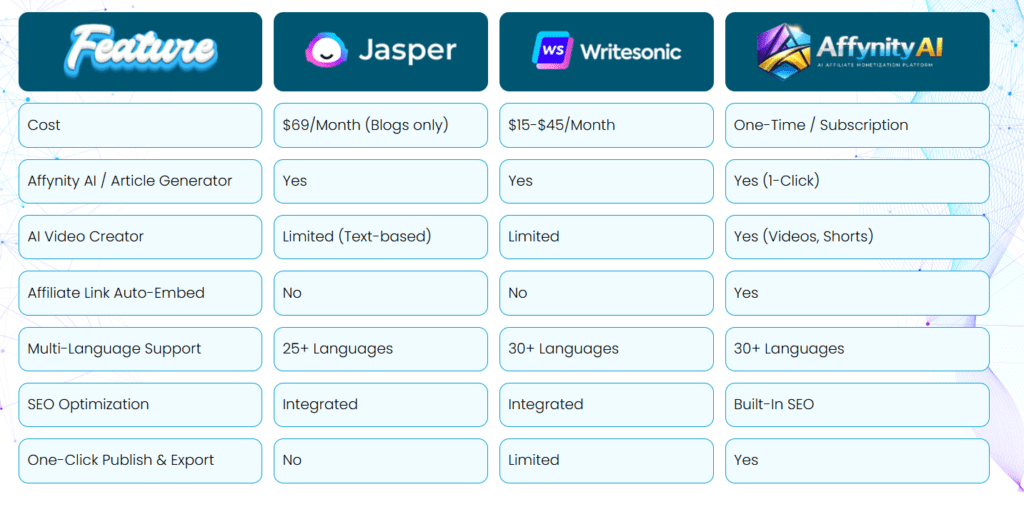
What usually differentiates good tools in this category:
- structure that matches buyer intent
- consistent outputs that don’t feel random
- edit controls that are actually usable
- less generic phrasing
- and the ability to keep your “brand voice” intact
Content Quality: What to Check Before You Publish Anything

This is the part that decides whether you make money or you just produce content.
Blog checks
Before you publish a blog review, look for:
- specificity: does it mention real features and limitations, or generic “this tool saves time” filler?
- clear verdict: who it’s for, who it’s not for
- buyer intent sections: pricing, use cases, comparisons, alternatives
- non generic phrasing: if it reads like every other AI review, rewrite the intro and verdict at minimum
Video checks
For review videos and scripts:
- hook in the first 3 to 5 seconds
- pacing that doesn’t feel like a Wikipedia read
- avoid unverified claims (especially earnings claims)
- clear CTA and affiliate disclosure in a natural way
SEO checks
- avoid keyword stuffing
- match title/meta to real search intent
- add internal links to relevant posts (this won’t happen automatically in a meaningful way unless you set it up)
- add schema only if accurate (don’t slap “Review schema” with fake ratings)
Uniqueness checks
If you want to avoid the “AI copy paste footprint”:
- rewrite the intro in your own voice
- add screenshots from the actual product or docs
- add 2 or 3 real observations (limitations, learning curve, weird UI parts)
- make pros and cons reflect reality, not generic templates
Compliance
Add affiliate disclosure. Every time. Everywhere it applies.
Also avoid unverified claims in YMYL niches. If you’re doing health supplements, financial products, legal tools, just be careful. AI can put you in trouble because it sounds confident while being wrong.
Best Use Cases (Who AffynityAI Is For)

AffynityAI makes the most sense for:
- affiliate marketers building review sites + YouTube channels + shorts funnels
- product reviewers who want A vs B comparisons at scale
- agencies/freelancers selling “review content packages” (commercial license angle)
- ecom sellers and social media managers who need lots of product content variations fast
- multi language creators targeting international traffic (if the multi language output is solid)
A simple way to think about it.
If your strategy is “publish consistently and improve winners,” tools like this can help you do the boring middle part faster.
You’re like this : Solo Ads Freedom Stack Review: 4 Secrets to Making Money With Solo Traffic
When AffynityAI Is NOT a Good Fit
Skip it if:
- you want deeply researched first hand testing reviews
- your niche requires strict factual accuracy without expert oversight (finance, health, legal)
- you dislike template driven content and want highly custom brand voice
- you are not willing to edit, verify, and add original insights or media
Because if you buy it believing “no editing,” you’ll either publish low quality content, or you’ll quit after a week. Usually the second.
AffynityAI Pricing (Front-End) and What You Get for $14.95
The advertised entry price is around $14.95 one time during launch.
What “one time” typically means in this market:
- lifetime access to the base version, as long as the product exists
- but limits and included features can vary
- and sometimes certain integrations or premium models are locked behind upgrades
So yes, treat it as: one time for the front end version, and confirm the actual limits on the checkout page.
Expected inclusions at this level, based on the positioning:
- blog + video + shorts generation
- SEO fields (title/meta/keywords)
- affiliate embed placements
- templates (DFY style)
- export/publish basics
- commercial license (as claimed)
Refund policy is stated as 30 day money back guarantee.
Suggested move: take screenshots of the checkout page feature list when you buy. Sounds silly, but it helps if you need to reference what was promised.
AffynityAI OTOs (Upgrades) — What They Likely Add and Who Should Consider Them
If you’re new, OTOs are just optional upgrades shown after you buy the front end.
You mentioned an add on: Premium AI Features Add-On at $9.98 one time.
In general, these “premium” add ons usually claim to improve things like:
- more templates
- better quality outputs
- more “uniqueness” or rewriting
- more automation
- more exports or integrations
- sometimes more language support
- sometimes fewer limits
How to evaluate any OTO, quickly:
- Does it remove a limit you will hit this month?
- Does it improve quality enough to reduce editing time?
- Does it add automation that actually saves hours? (not minutes)
- Does it expand client rights if you sell services?
Decision guide:
- If you post occasionally, you probably do not need upgrades.
- If you’re an agency or high volume affiliate, upgrades can make sense if they remove caps or add automation you’ll use daily.
Warning I’d keep in mind:
Don’t buy OTOs without knowing exactly what changes. Limits, output quality, exports, platforms, languages. If it’s vague, it’s usually not worth it.
AffynityAI Bonus: What Bonuses Are Included (And How Much They Matter)
Bonuses listed in your outline:
- Community Hub Builder
- Viral Media Slider
- Auto Content Spinner
- AI Content PowerSuite
- Video SEO Master
How I’d judge these.
First, figure out what they actually are:
- separate tools?
- WordPress plugins?
- training?
- templates?
Then ask: will I really use them?
A “viral slider” might help presentation on a site. A “video SEO master” might be a basic training. A content spinner is the one I’d be careful with, because spinning can easily create garbage text and footprint problems if abused. Use carefully, and only as a starting point.
Also, bonus “value” claims are usually marketing numbers. Ignore the MSRP style math.
The core tool quality matters more than any bonus stack. Always.
Realistic Results: What You Can Achieve in 7 Days (If You Use It Right)
Here’s a realistic 7 day plan that doesn’t rely on fantasy.
Day 1
- pick 1 niche, not 5
- set up templates and your disclosure blocks
- set up affiliate networks, tracking, UTMs
- create a naming system for posts and videos (sounds boring, saves your brain)
Day 2 to 3
- generate 5 to 10 reviews
- generate 10 to 20 shorts
- edit intros and verdict sections
- add original screenshots where possible
Day 4 to 5
- publish to WordPress and or Medium
- schedule shorts output
- test A vs B comparisons targeting buyer intent keywords
Day 6 to 7
- review analytics (CTR, watch time, clicks)
- double down on formats that convert
- update CTAs and links
- rewrite weak intros that bounce
Expectation check:
Traffic and rankings depend on niche competition, consistency, and actual content value. A tool can speed up production, but it cannot manufacture authority.
Top Alternatives to AffynityAI (When You Might Choose Something Else)
ChatGPT or Claude
Best when you want control and custom prompts. But you’ll do more manual work for publishing, SEO fields, link placement, formatting, and repurposing.
Dedicated SEO tools + human editing
Best if rankings and originality are the priority. Slower, more expensive. Usually better long term if you’re building a serious site.
Standalone video tools
Best if your channel needs heavy editing control, unique visuals, custom captions, and a strong “look.” Multi format AI tools often produce decent scripts, but the visual identity still needs work.
Hiring freelancers
Best for expert reviews and strong brand voice. Costs more and slower turnaround, but you get actual human insight if you hire well.
Final Verdict: Should You Buy AffynityAI in 2026?
Buy AffynityAI in 2026 if you’re an affiliate or creator who wants faster multi format review production, and you’re willing to edit, verify, and add original touches so the content doesn’t feel stamped out.
Skip it if you expect instant rankings or instant virality with zero effort, or if you need expert tested reviews where accuracy is non negotiable.
At around $14.95 entry price, the risk is relatively low if you’ll actually publish consistently. Just be cautious with OTOs unless they solve a real bottleneck you already understand.
If you’re deciding, decide based on workflow fit. Not hype.
Images to include in WordPress (recommended placements)
Use these as placeholders and replace with your own screenshots (dashboard, output examples, pricing box) once you have access.
FAQs (Frequently Asked Questions)
What is AffynityAI and what does it offer?
AffynityAI is an all-in-one AI review and content system designed to generate a full review asset pack from a single dashboard. It creates SEO blog posts, YouTube-style review video scripts, short form snippets for TikTok, Instagram Reels, YouTube Shorts, comparison reviews (A vs B), affiliate link placements, and includes publishing and sharing features.
Who is AffynityAI best suited for?
AffynityAI is ideal for content creators who frequently publish review content and want to streamline the process by generating blog posts, videos, and shorts from one platform. It’s suitable for those comfortable editing AI-generated content before publishing and who prioritize structure, speed, and consistency over deep product testing or highly distinctive brand voices.
What are the limitations of using AffynityAI?
AffynityAI is not recommended if you expect instant rankings or viral content without editing. It’s also unsuitable for strict accuracy niches like finance, health, or legal unless expert review is involved. Additionally, if you dislike template-based content or want unique brand voices every time, this tool may not meet your needs.
How does AffynityAI compare to traditional content creation tools?
AffynityAI aims to replace the typical stack of multiple tools such as AI writers, SEO plugins (RankMath, Yoast), video editing tools, schedulers (Buffer, Metricool), social posting platforms, link tracking systems, and spreadsheets by consolidating these functions into one dashboard for easier management of review content.
What is the pricing structure of AffynityAI in 2026?
During launch promotions in 2026, AffynityAI’s front-end price starts around $14.95 with optional upgrades (OTOs). However, users should confirm current pricing details and what the ‘one-time’ deal includes on the checkout page as these offers can change rapidly during launches.
Why are AI-generated reviews and short videos becoming popular in 2026?
Buyer behavior has shifted towards wanting quick comparisons, fast verdicts on product worthiness, visual proof or walkthroughs that can be consumed while distracted. Creators need volume, consistency, and multi-platform output. AI helps overcome bottlenecks like time-consuming writing/editing, video production friction, SEO complexity, publishing chores, and high pricing of multiple separate tools.