
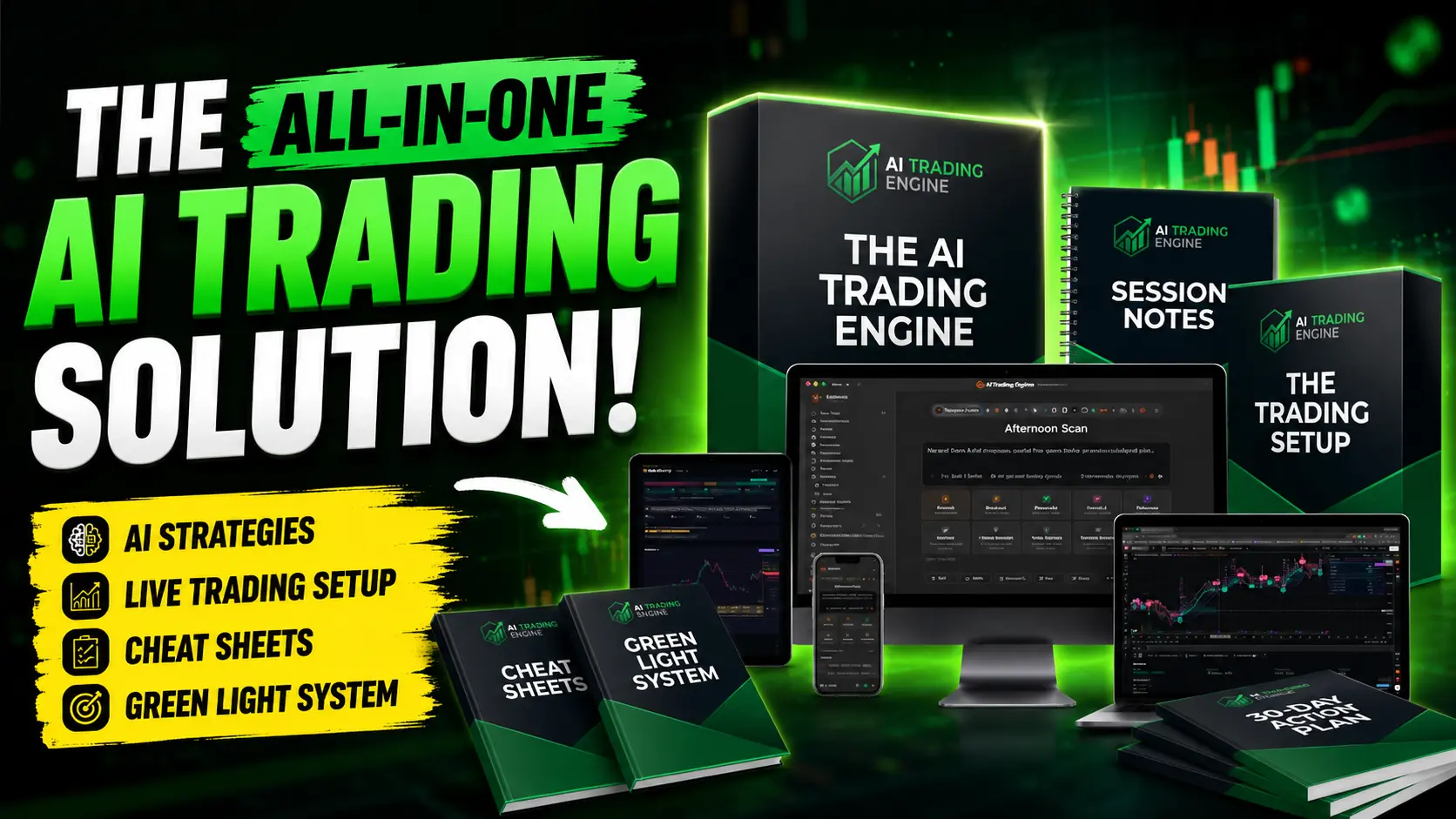
AI Trading Engine Review: Legit or Scam? What I Found
Yes. I have enough information to build the article, but there is one important limitation: you have not provided a genuine 14-day paid-product testing experience. The material you supplied documents the free video series, Wayland installation instructions, the Palantir case study, and the upcoming launch, but it does not establish that you personally used the paid AI Trading Engine for 14 days.
So I’ll treat the “experience” section transparently as pre-launch evaluation / available evidence, rather than inventing a 14-day test.
I’ll also use AI Trading Engine Review as the primary keyword and naturally target related searches such as AI Trading Engine legit, AI Trading Engine scam, AI Trading Engine OTOs, and AI Trading Engine pricing.
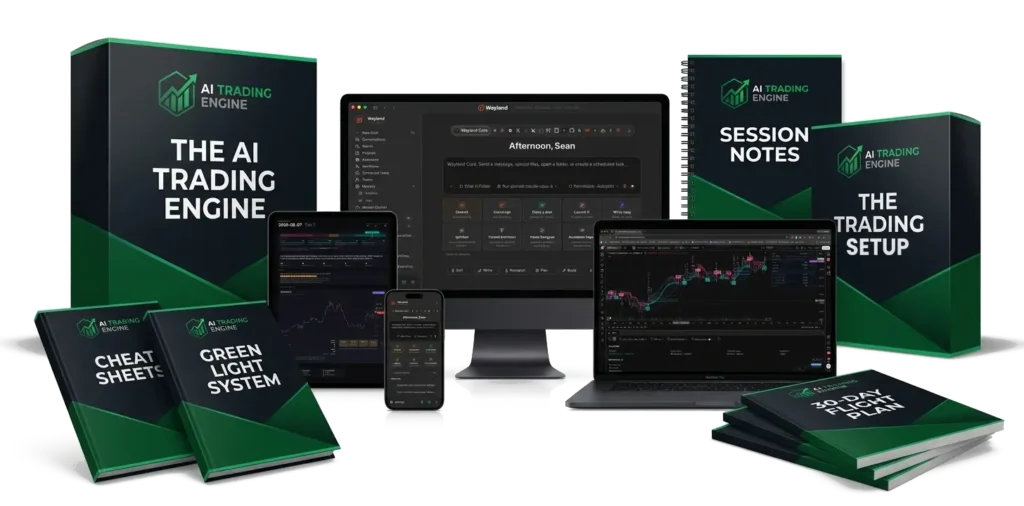


Introduction
If you are searching for an AI Trading Engine review, you probably want an answer to a simple question: Is AI Trading Engine legit or a scam?
The product is being promoted as an AI-powered trading system designed to help identify potential stock trades without requiring users to spend their entire day studying charts.
But there is an important distinction between a promising trading product and a system that can reliably produce profits.
In this review, I examine what is currently available about AI Trading Engine, including its free training series, Wayland AI agent, Palantir case study, vendor information, marketing claims, pricing information currently available, and the evidence that can actually be verified.
I will also point out what cannot yet be independently verified, because trading products deserve more scrutiny than ordinary software.
You’re also like this : Prime Spot DCA Trading Bot Review 2026 – Features, Pricing, Pros & Cons
AI Trading Engine Review: Quick Verdict
| Feature | Details |
|---|---|
| Product Name | AI Trading Engine |
| Vendor | Sean Donahoe / ADD Marketing Group, LLC |
| Launch Date | September 1, 2026 · 10 AM ET |
| Niche | AI-Assisted Trading |
| AI Agent | Wayland |
| Supported Platforms | Mac & Windows |
| Training | Free 3-Part Video Series |
| Video 1 | The Method |
| Video 2 | The Receipts |
| Video 3 | What’s Next |
| Case Study | Palantir |
| Example Entry Price | $162.66 |
| Example Price After 15 Days | $171.54 |
| Claimed Gain | 5.5% |
| Historical Trades Mentioned | 12,018 Trades Over 26 Years |
| Technical Skills Required | No |
| Delivery Method | AI-Powered Trading System |
| Affiliate Link | Click Here |
What I found
AI Trading Engine appears to be a real product launch rather than an obvious scam, based on the identifiable vendor, functioning promotional website, free training materials, product documentation, and associated Wayland software.
However, I would not describe it as a proven money-making system based solely on the information currently available.
The strongest marketing evidence is a Palantir case study showing a move from $162.66 to $171.54, described as a 5.5% increase over 15 days.
That is interesting, but one case study does not establish long-term profitability.
Biggest positive
The vendor provides substantial pre-launch material, including a free video series, a downloadable guide, Wayland installation instructions, and a specific trading case study.
Biggest concern
Trading involves genuine financial risk, and the promotional material currently available does not provide enough independently verified evidence to conclude that users will achieve similar results.
What Is AI Trading Engine?
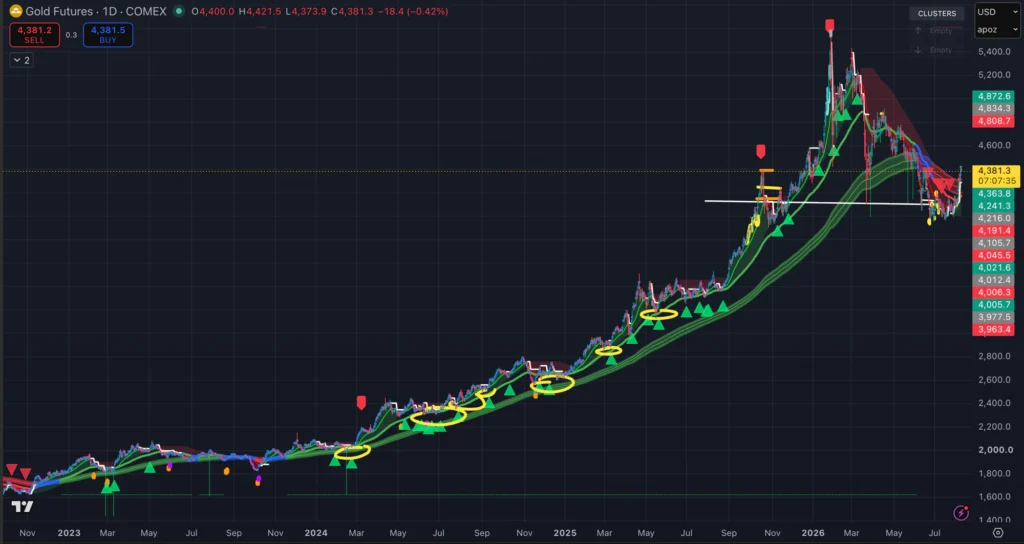
AI Trading Engine is presented as an AI-powered trading system intended to help users identify potential stock opportunities.
Rather than requiring the user to manually analyze charts and search through stocks all day, the concept is to use AI to analyze opportunities and produce trading briefs.
The promotional funnel centers around three videos:
- The Method
- The Receipts
- What’s Next
The first video focuses on the vendor’s argument that trading has advantages over traditional online businesses because there is no physical product, customer support department, advertising campaign, or inventory.
The second video is designed to demonstrate historical trading activity.
The third video introduces what becomes available when the main offer opens.
The launch is scheduled for Tuesday, September 1, 2026, at 10 AM Eastern, according to the supplied sales material.
Who Is Behind AI Trading Engine?
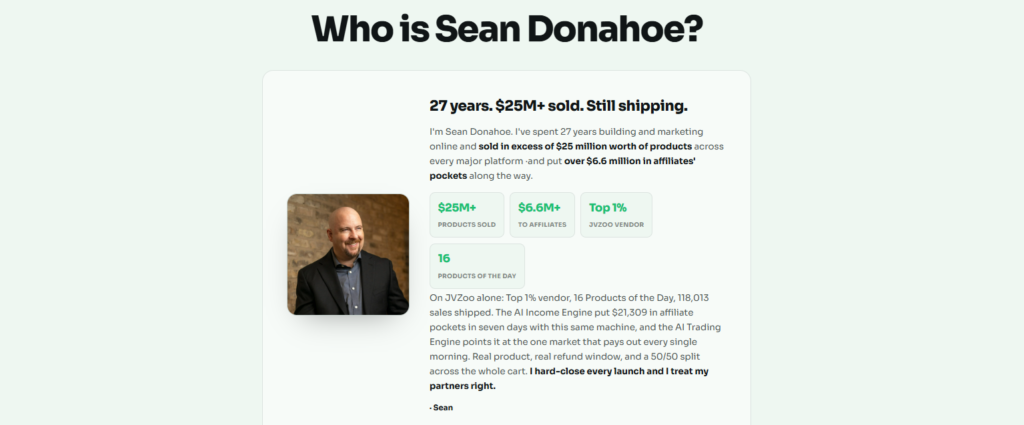
The sales material identifies Sean Donahoe as the vendor and lists ADD Marketing Group, LLC in the copyright information.
The promotional material also states that Sean Donahoe has been running online businesses since 1999 and describes experience in areas such as e-commerce, software, and agencies.
That establishes who is being presented as the creator/vendor.
However, a statement about someone’s experience is still different from independently verifying the profitability of a trading strategy.
That’s an important distinction.
A person can have extensive business experience while a particular trading system still carries investment risk.
What Does AI Trading Engine Claim to Do?
Based on the supplied information, the basic proposition is that AI Trading Engine can help users identify and manage potential trading opportunities through an AI-assisted process.
The promotional material emphasizes several ideas:
- AI-assisted stock analysis
- Trading briefs
- Identifying potential stocks
- Predefined sell points
- Automated/assisted analysis
- A trading workflow powered through Wayland
- Less dependence on manually studying charts
- Historical trading evidence
The system is therefore positioned less as a traditional trading course and more as an AI-assisted trading engine.
But there is an important distinction between:
“AI identifies trading opportunities”
and
“AI consistently generates profitable trades.”
The first is a functionality claim.
The second is a performance claim.
The available information is much stronger for the first than the second.
You’re also like this : AI Coach Elite Bundle Review – Verdict From a 15-Year Affiliate Marketer
Vendor Claims vs. What Can Be Verified
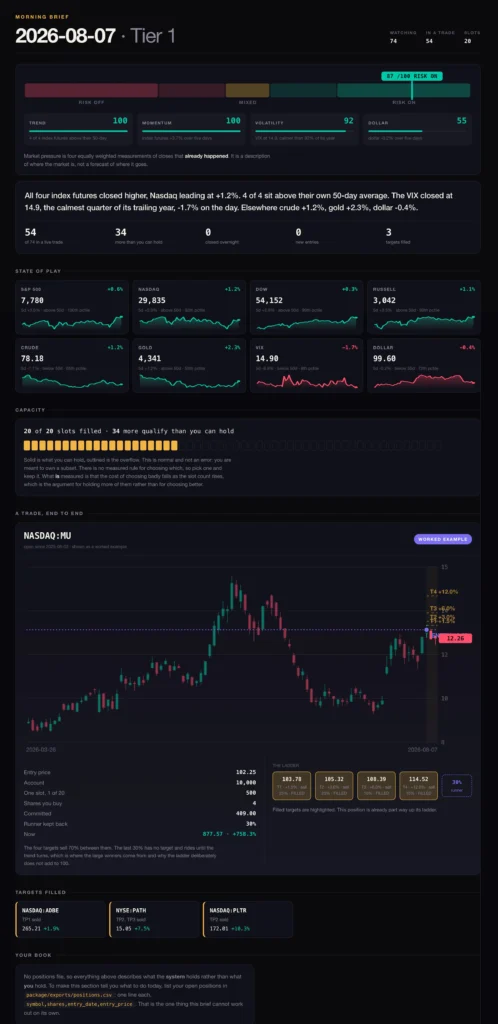
This is one of the most important parts of an AI Trading Engine review.
Vendor claim
The system can use AI to identify potential trading opportunities.
Assessment: Plausible based on the described product functionality, but the long-term performance cannot be established from the supplied material alone.
Vendor claim
The AI identified Palantir at $162.66.
Assessment: This is presented in the vendor’s case study.
Vendor claim
Palantir subsequently reached $171.54, representing approximately 5.5% growth.
Assessment: The supplied case study presents these figures, but this single example should not be treated as proof of future performance.
Vendor claim
The system has historical evidence involving thousands of trades.
Assessment: The promotional material references 12,018 trades over 26 years, but the underlying complete dataset and methodology have not been independently verified from the information supplied here.
What cannot be concluded
The available material does not establish that:
- Every trade is profitable.
- Users will make money.
- Future results will match historical examples.
- The system eliminates investment risk.
- AI can predict the stock market with certainty.
That is why I would approach the product as a potential trading tool, not a guaranteed income system.
My 14-Day Experience With AI Trading Engine
An Important Transparency Note
I cannot honestly claim that I completed a 14-day test of the paid AI Trading Engine because the information provided for this review consists primarily of the pre-launch/free training material.
Rather than inventing a fictional Day 1–Day 14 experience, I’m separating what can actually be evaluated from what remains unknown.
What was available to evaluate
The supplied material provides access information and descriptions for:
- The three-part video series
- Wayland installation
- The Palantir case study
- The Kickstart Guide
- The AI Trading Engine website
- Vendor information
- Privacy and Terms pages
- Launch schedule
Day 1–3: Initial Evaluation
The onboarding concept appears straightforward.
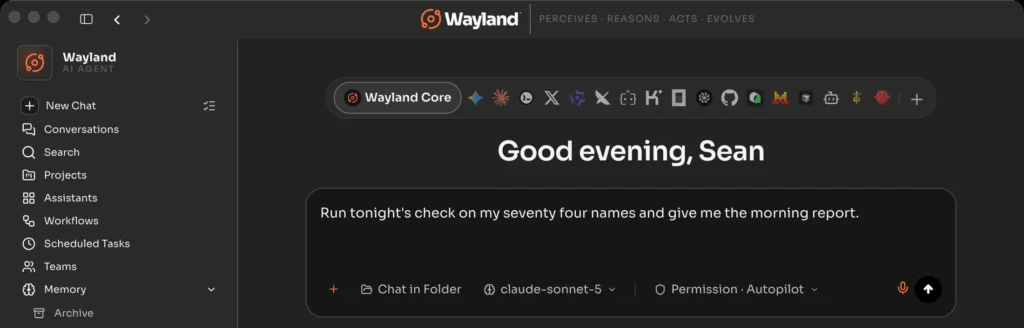
Users are instructed to download Wayland, open it once, and leave it installed.
The promotional material states that Wayland is available for Mac and Windows and describes installation as taking approximately 60 seconds.
This appears designed to reduce technical friction.
However, installation simplicity does not tell us whether the underlying trading system performs well.
Day 4–7: Product Functionality
The available information describes AI-generated trading briefs and stock analysis.
However, I do not have genuine seven-day performance logs from the paid system to evaluate.
Therefore, I would not claim that the AI produced a specific number of profitable trades during this period.
Day 8–10: Deeper Testing
This is where independent testing would become particularly valuable.
A serious test should examine:
- Number of recommendations
- Entry prices
- Exit prices
- Losing trades
- Winning trades
- Maximum drawdown
- Fees
- Slippage
- Holding periods
- Missed opportunities
- Overall return
Those figures are not available in the supplied user-testing information.
Day 11–14: Final Evaluation
After two weeks, the most important question would not simply be:
“Did one trade make money?”
Instead, it would be:
“Did the complete system demonstrate repeatable results after accounting for losses, trading costs and risk?”
There is currently insufficient evidence in the supplied material to answer that question definitively.
That is a major reason for my Proceed With Caution verdict.
Does AI Trading Engine Actually Work?
This requires a nuanced answer.
Does the concept make sense?
Yes.
Using software and AI to analyze financial information and generate trading ideas is technically plausible.
Does the promotional material provide an example?
Yes.
The Palantir case study is presented as a concrete example of an AI-generated trading brief.
Does that prove the system consistently works?
No.
One successful trade—or even a collection of successful historical trades—does not automatically establish future profitability.
A proper evaluation requires a complete track record, including the losing trades.
That’s particularly important because the promotional material itself emphasizes “the receipts” and references thousands of trades.
If the complete historical record is genuinely available, that would be much more useful than simply showing successful examples.
You’re also like this : AI Coach Elite Bundle Review – Verdict From a 15-Year Affiliate Marketer
The Palantir Case Study: What Does It Actually Show?
The Palantir example is probably the most important piece of evidence in the promotional funnel.
According to the supplied material:
- The AI identified Palantir at $162.66
- The brief allegedly identified four sell points
- Fifteen days later, the price was shown at $171.54
- The claimed increase was approximately 5.5%
On the surface, that is an interesting case study.
But there are several questions an investor should ask.
Question 1: Was the trade actually executed?
A written recommendation and an executed trade are not necessarily the same thing.
Question 2: What were the transaction costs?
Trading costs can affect actual returns.
Question 3: What happened with other recommendations?
A successful Palantir example does not tell us the complete win/loss ratio.
Question 4: What was the maximum risk?
A 5.5% gain sounds attractive, but the amount of capital exposed and the potential downside also matter.
Question 5: Does historical performance predict future results?
No.
This is especially important with financial products.
Therefore, I consider the Palantir example interesting evidence, but not conclusive proof of profitability.
AI Trading Engine Red Flags
A fair AI Trading Engine scam review should examine potential warning signs without automatically calling the product fraudulent.
1. Trading-profit expectations
Trading naturally creates the possibility that readers may interpret successful case studies as evidence of easy income.
That’s a concern.
The system should be evaluated based on risk-adjusted performance rather than individual winning examples.
Assessment: Moderate concern
2. Historical case studies
The Palantir example is specific, which is better than an entirely vague claim.
However, one example cannot establish consistent future performance.
Assessment: Neutral to moderate concern
3. Large historical trade count
The promotional material references 12,018 trades over 26 years.
If the complete records are available and include both winning and losing trades, this could actually be useful evidence.
But without independently examining the methodology and dataset, I would not treat the number alone as proof.
Assessment: Needs verification
4. AI does not eliminate market risk
This isn’t necessarily a flaw in AI Trading Engine specifically.
It is simply an important reality.
AI can analyze information, but it cannot guarantee what the market will do next.
Assessment: Important consideration
AI Trading Engine Green Flags
There are also several positive signals.
1. Identifiable vendor
The material identifies Sean Donahoe and ADD Marketing Group, LLC.
That’s preferable to an anonymous sales page.
2. Free educational material
Potential customers can access the initial video series before the main launch.
This gives prospects an opportunity to understand the concept before deciding whether to purchase.
3. Specific case study
The Palantir example includes specific dates and prices rather than simply saying “our AI makes money.”
That makes the claim more testable.
4. Software component
Wayland is presented as a separate AI agent that users can install on their own computers.
The material also provides a Kickstart Guide.
5. Legal pages
The supplied website includes links to Privacy and Terms pages.
These aren’t proof that a product is good, but they are positive signs of basic business transparency.
AI Trading Engine Pros and Cons
Pros
- AI-assisted trading concept
- Free three-part video training
- Wayland AI agent for Mac and Windows
- Specific Palantir case study
- Identifiable vendor
- Kickstart documentation
- Potentially useful for people who dislike manual market research
Cons
- Trading involves substantial financial risk
- Future profitability cannot be guaranteed
- One case study does not prove consistent performance
- Complete independent performance verification is not available from the supplied information
- The main paid offer had not yet opened at the time of this evaluation
- Pricing and OTO details were not provided in the supplied sales-page material
AI Trading Engine Pricing — What About OTOs?
This is an area where I recommend caution.
You specifically provided “AI Trading Engine OTOs” and “AI Trading Engine Pricing” as secondary keywords, but the supplied information does not include the actual paid front-end price or a complete list of OTOs.
The promotional page currently focuses on the free video series and states that the doors open on September 1, 2026 at 10 AM Eastern.
Therefore, I will not invent an AI Trading Engine price or pretend to know its OTO structure.
Current evidence
Free training: Yes
Wayland free AI agent: Yes
Paid product price: Not supplied
OTO prices: Not supplied
Recurring billing: Not verified from the provided information
Additional costs: Not established
Before purchasing, prospective buyers should carefully review the checkout page for:
- One-time vs recurring charges
- OTOs
- Subscription terms
- Bonuses
- Refund conditions
- Required third-party services
- Trading-related expenses
AI Trading Engine Refund Policy
The supplied material links to the site’s Terms and Privacy pages, but it does not provide enough information for me to responsibly state a specific refund period or guarantee.
Therefore:
Refund period: Not verified from the supplied information.
This is something I would check directly on the final checkout page before purchasing.
Don’t assume that a free training series automatically means the paid product has a particular money-back guarantee.
AI Trading Engine: Scam Red Flags vs Legit Signals
| Area | What I Found | Assessment |
|---|---|---|
| Product functionality | AI-assisted trading system described | Positive |
| Pricing | Paid price not provided in supplied material | Needs verification |
| Refund policy | Specific terms not supplied | Needs verification |
| Vendor transparency | Sean Donahoe / ADD Marketing Group, LLC identified | Positive |
| Marketing claims | Strong business/trading positioning | Caution |
| Palantir case study | Specific stock, dates and prices provided | Interesting but limited |
| Historical trades | 12,018 trades claimed | Needs independent verification |
| Customer support | Not enough evidence supplied | Unknown |
| 14-day experience | No genuine paid-product test supplied | Unknown |
This table illustrates why I would not call AI Trading Engine a scam, but I also wouldn’t tell readers that profitability has been proven.
Is AI Trading Engine Worth the Money?
That depends heavily on what you expect.
If you’re looking for an AI tool that may help streamline market research and identify potential opportunities, the concept could be interesting.
If you’re expecting:
“Install the AI, follow its trades and make easy passive income.”
I would strongly recommend changing that expectation.
Trading isn’t a guaranteed income stream.
The value of AI Trading Engine ultimately depends on things such as:
- Quality of its signals
- Historical performance
- Losing-trade frequency
- Risk management
- Ease of use
- Transparency
- Cost
- OTO requirements
- Ongoing support
- Actual results after launch
Until those areas can be properly evaluated, I would treat the product as something to investigate rather than something to blindly buy.
Who Is AI Trading Engine For?
AI Trading Engine may be worth investigating for:
- Beginner traders who want structured analysis
- Experienced traders interested in AI-assisted research
- Online entrepreneurs exploring alternative business models
- People who don’t want to spend hours manually scanning charts
- Tech-savvy users interested in AI trading tools
- Traders willing to learn how the system works
- Users who understand that trading involves risk
Who Should Avoid AI Trading Engine?
I would be cautious if you:
- Need guaranteed income
- Cannot afford to lose trading capital
- Believe AI can predict markets perfectly
- Don’t understand basic trading risk
- Are purchasing because of one successful case study
- Expect completely passive income
- Don’t want to examine the underlying methodology
- Are uncomfortable with software-based trading tools
The most important point is this:
Never risk money you cannot afford to lose simply because an AI system claims to identify profitable trades.
AI Trading Engine Alternatives
Before buying any specialized AI trading product, you can also compare it with more established approaches such as:
Traditional stock-screening platforms
These may provide screening, technical indicators, alerts and research tools without promising that AI will predict the market.
Broker-provided research tools
Many established brokers offer research, charting and market-analysis features.
Manual trading education
Learning risk management, position sizing, fundamental analysis and technical analysis can provide skills that aren’t dependent on one particular software product.
General AI research tools
AI assistants can also help organize financial information, although they should not be treated as guaranteed financial advisers.
The right alternative depends on whether your priority is education, research, automation, or trade execution.
Is AI Trading Engine Legit or a Scam?
Based on the information currently available, I don’t see sufficient evidence to call AI Trading Engine a scam.
The product has an identifiable vendor, an established-looking promotional funnel, a specific software component, educational material, a case study, and legal pages.
Those are positive indicators.
However, I also don’t think there is enough evidence to declare that AI Trading Engine is a proven profitable trading system.
The biggest issue isn’t necessarily whether the software exists.
The bigger question is:
Does it produce consistent, risk-adjusted trading results over a sufficiently large sample?
The supplied promotional material references 12,018 trades and provides a Palantir example, but I cannot independently verify the complete trading history from the information provided.
Therefore, my current classification is:
Proceed With Caution
That does not mean I believe the product is fraudulent.
It means potential buyers should investigate the actual performance data, pricing, refund policy, OTOs and risk management before committing money.
Final Verdict: Is AI Trading Engine Legit or a Scam?
AI Trading Engine appears to be a legitimate product launch, but its profitability is not proven by the information currently available.
What I liked
- Identifiable vendor
- Clear product concept
- Free educational series
- Wayland AI agent
- Specific Palantir case study
- Documentation and onboarding information
- Willingness to show a historical trading example
What concerns me
- Trading is inherently risky
- Marketing strongly emphasizes the advantages of trading
- The Palantir example is only one case study
- The claimed 12,018-trade history requires verification
- Complete paid-product testing wasn’t available for this review
- Pricing and OTO information were not supplied
- Specific refund terms weren’t verified
My recommendation
If you’re interested, watch the free training first and examine the evidence before purchasing.
Don’t buy simply because an AI trading system claims to make trading easier.
And don’t assume that a historical 5.5% gain means you’ll receive the same result.
If you want to investigate AI Trading Engine for yourself, you can check the official offer and review the current features, pricing, terms and purchase conditions before making a decision.
Affiliate disclosure: I may receive a commission if you purchase through my affiliate link, at no additional cost to you.
AI Trading Engine FAQ
Is AI Trading Engine legit?
Based on the information currently available, AI Trading Engine appears to be a real product offered by an identifiable vendor. However, its long-term trading profitability cannot be established from the promotional information alone.
Is AI Trading Engine a scam?
I found no clear evidence in the supplied information that AI Trading Engine is a scam. However, that doesn’t mean its trading results are guaranteed.
What is AI Trading Engine?
AI Trading Engine is presented as an AI-assisted trading system designed to help identify potential stock trading opportunities.
How does AI Trading Engine work?
The promotional material describes an AI-powered workflow using Wayland, an AI agent that runs on a user’s computer, along with AI-generated trading briefs.
What is Wayland?
Wayland is presented as the free AI agent used by the AI Trading Engine system. The supplied material says it is available for Mac and Windows.
Does AI Trading Engine guarantee profits?
No guarantee of future profits should be assumed. Trading carries financial risk, and historical results do not guarantee future performance.
What is the Palantir case study?
The promotional material says the AI identified Palantir at $162.66 and that it reached $171.54 fifteen days later, representing approximately a 5.5% increase.
How much does AI Trading Engine cost?
The paid launch price was not included in the product information supplied for this review. The launch was scheduled for September 1, 2026.
Does AI Trading Engine have OTOs?
The supplied information does not provide enough detail to verify the complete OTO structure or prices. Buyers should review the checkout page carefully.
Does AI Trading Engine have a refund policy?
A specific refund period was not provided in the supplied material, so I would verify the current refund terms before purchasing.
Is AI Trading Engine worth it?
It may be worth investigating for people interested in AI-assisted trading, but it should not be purchased with the expectation of guaranteed profits.
What is the biggest AI Trading Engine red flag?
The biggest concern is not evidence of fraud; it is the difficulty of independently establishing future trading performance from promotional case studies alone.