1. Introduction: What Is NAZO BOX?
Finding a suitable niche and creating an original puzzle book can be challenging for people interested in publishing through Amazon Kindle Direct Publishing (KDP). Traditional puzzle book creation often involves designing puzzles, checking answers, arranging pages, preparing illustrations and formatting the final document for printing.
For beginners, these tasks can take considerable time, especially when creating multiple books. Even experienced publishers may find it difficult to produce picture-based logic puzzles consistently without spending hours working on individual pages.
This is where NAZO BOX enters the picture.
NAZO BOX is a puzzle book creation software designed to help users build murder mystery nonogram books. It combines picture-logic puzzle generation, automatic puzzle verification, short mystery stories and book layout customization in one application.
Instead of manually drawing every puzzle grid and calculating the numbers for each row and column, users can select their preferred difficulty and layout and let the software generate the book.
The platform also includes editing options, a project library and export tools for creating files intended for publishing or other digital uses.
But is NAZO BOX actually worth buying in 2026? Does it offer enough functionality for Amazon KDP publishers? What about its pricing, monthly export allowance, commercial rights and included bonuses?
In this NAZO BOX Review, I’ll examine the advertised features, explain how the software works, discuss its advantages and limitations, and help you decide whether it deserves a place in your publishing workflow.
My approach: This review is based on the product information supplied on the official promotional page. Features and terms are described as advertised rather than presented as independently tested results.
2. What Is NAZO BOX Designed to Do?
NAZO BOX is designed to simplify the creation of murder mystery picture-logic puzzle books.
To understand its purpose, it helps to know what a nonogram puzzle is.
A nonogram is a picture-based logic puzzle in which readers use numerical clues positioned above columns and beside rows to determine which squares should be filled in. When the correct squares are completed, a hidden image appears.
For example, solving a puzzle might reveal a skull, key, magnifying glass, dagger, footprint or another object connected to a mystery.
NAZO BOX combines this puzzle format with a murder mystery theme.
The software aims to create books in which readers investigate fictional crime scenes by solving picture-logic puzzles. Each puzzle becomes part of a small mystery, making the reading experience different from traditional number puzzles or ordinary Sudoku books.
The advertised system brings several activities together:
- Generate picture-logic puzzles.
- Create numerical clues automatically.
- Verify puzzle solutions.
- Add short murder mystery story elements.
- Organize puzzles into book layouts.
- Customize text, images and page elements.
- Export completed pages as PNG or JPG.
- Export print-ready PDF files.
The main idea is to reduce the amount of manual work involved in creating this particular type of puzzle book.
For Amazon KDP publishers, this could be useful because producing a book involves more than simply generating puzzles. The pages must also be organized, readable and properly prepared for publication.
However, NAZO BOX is a creation tool, not an automatic publishing or sales platform. You still need to research your audience, prepare an appropriate cover, review the final interior and publish the book yourself.
3. How Does NAZO BOX Work?
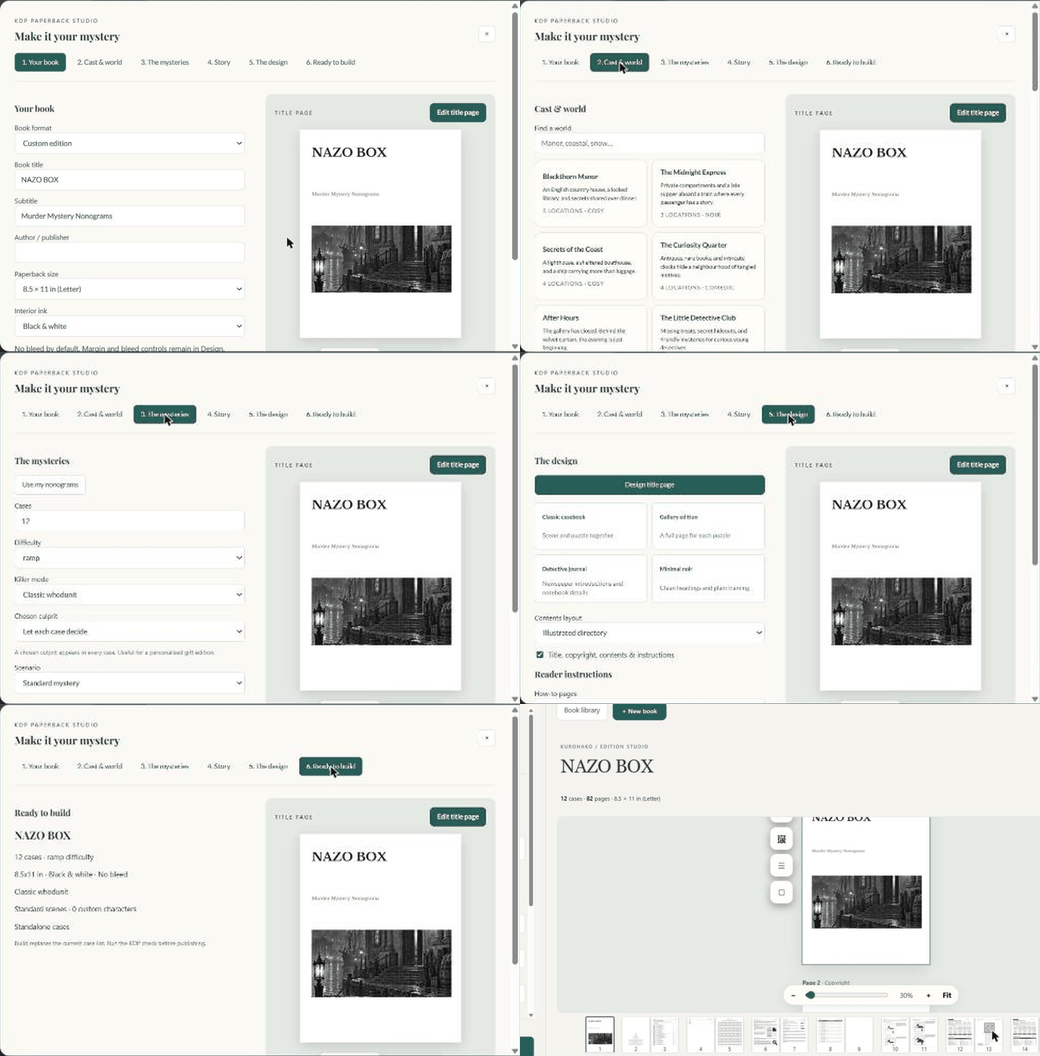
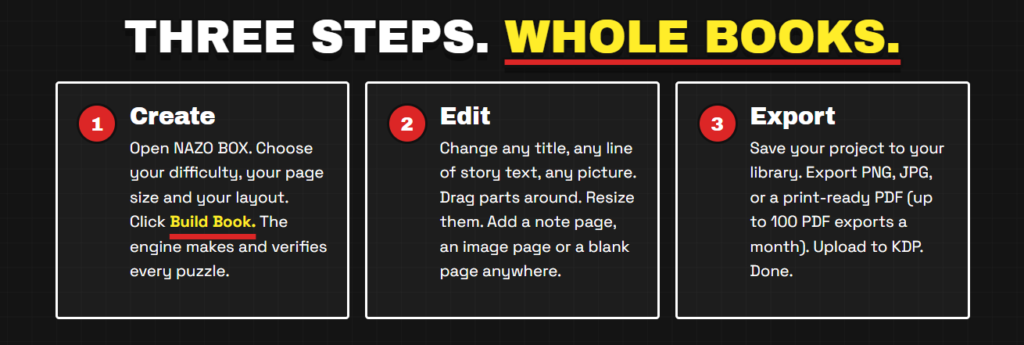
The NAZO BOX workflow is advertised as a three-step process: Create, Edit and Export.
Step 1: Create Your Puzzle Book
First, open NAZO BOX and choose your preferred settings.
According to the sales page, users can select difficulty levels, page sizes and layouts before generating a book.
After choosing the settings, click the Build Book option.
The software then generates the picture-logic puzzles and checks their solutions. The promotional page demonstrates a setup wizard that creates a book containing 12 cases and 82 pages.
This is an advertised demonstration rather than a guarantee that every project will have the same page count.
Step 2: Edit and Customize
Once the book has been generated, you can customize its contents.
The sales page describes editing options for:
- Titles and headings.
- Mystery story text.
- Pictures and illustrations.
- Captions and other page elements.
- Fonts and formatting.
- Page layouts and element positions.
You can also drag and resize elements to adjust the appearance of individual pages.
This matters because automated content may provide a starting point, but publishers often want to change names, descriptions and visual elements before releasing a book.
Step 3: Export Your Finished Book
After editing, save your project in the software’s local book library.
You can reopen saved projects later, make additional changes and export them again.
The advertised export formats are:
- PDF for complete book interiors.
- PNG for individual page images.
- JPG for individual page images.
The sales page specifies an allowance of up to 100 PDF exports per month on the advertised plan.
Once exported, you can review the interior and prepare it for Amazon KDP or another supported publishing destination.
Remember that exporting a PDF does not automatically mean that Amazon will approve the book. You remain responsible for checking the final document against the applicable publishing requirements.
4. Exploring the Main Features of NAZO BOX
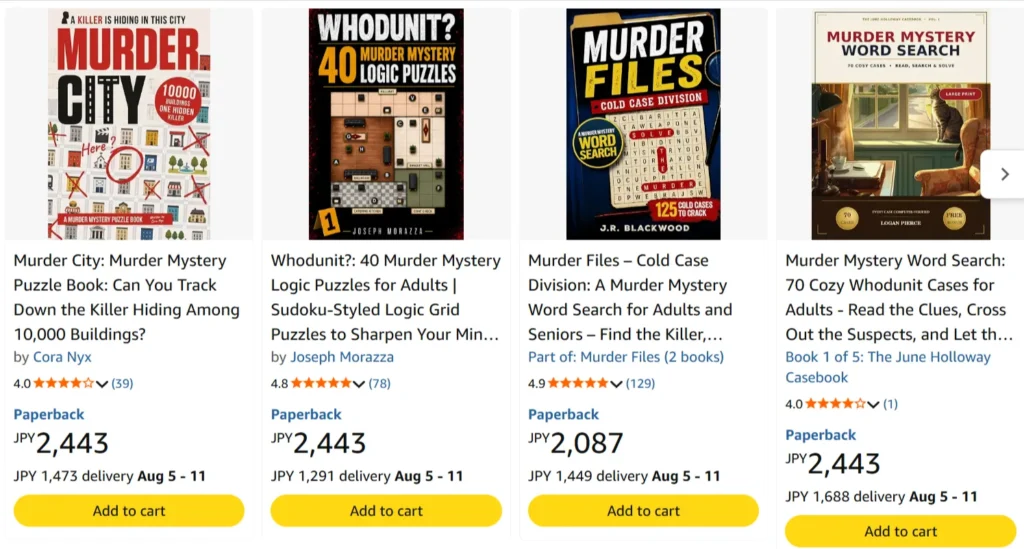
Let’s look more closely at the main features advertised by the NAZO BOX software.
4.1 Picture-Logic Puzzle Generator
The picture-logic engine is arguably the central feature of NAZO BOX.
Instead of manually drawing a picture and converting it into numerical clues, the software generates the puzzle structure.
Readers use the numbers along the grid to identify which squares should be filled. As they solve the puzzle, an image gradually appears.
The promotional page displays several example puzzle themes, including:
- Skull.
- Key.
- Magnifier.
- Dagger.
- Candle.
- Footprint.
- Bottle.
- House.
These images demonstrate how the picture-based puzzles can be incorporated into mystery-themed books.
For publishers, this offers an alternative to traditional word searches, Sudoku and ordinary crossword puzzles.
It could also help create a consistent visual theme throughout a book.
One important distinction is that the software generates the puzzle content. You should not assume that every generated image or story will match your intended publishing concept without editing and reviewing it.
4.2 Automatic Puzzle Verification
Puzzle accuracy is especially important when publishing activity books.
Imagine purchasing a puzzle book and discovering that one of its puzzles has two possible answers or cannot be solved at all. That experience could frustrate readers and affect their opinion of the book.
NAZO BOX advertises an automatic verification engine intended to address this problem.
According to the product explanation, the software follows three stages:
- It creates the picture.
- It generates the numerical clues.
- It attempts to solve the puzzle to verify that it has exactly one solution.
If the puzzle cannot be verified, the promotional page says it will not be included in the finished output.
This is one of the most interesting advertised capabilities because checking nonogram puzzles manually can be time-consuming.
Nevertheless, automatic puzzle verification should not replace human quality control. You should still inspect the generated puzzles, instructions, answer keys and page formatting before publishing.
4.3 Difficulty and Layout Controls
Different readers have different puzzle-solving abilities.
A beginner may prefer simple grids, while experienced puzzle enthusiasts may enjoy more challenging designs.
NAZO BOX advertises difficulty controls that allow users to create puzzles ranging from easier to harder levels.
The product also describes options for adjusting:
- Grid sizes.
- Page sizes.
- Puzzle layouts.
- One-case-per-page arrangements.
- Two-case-per-page arrangements.
These controls could help publishers produce different editions for different audiences.
For example, you might create a beginner-friendly mystery puzzle book and later develop a more challenging edition.
The software also demonstrates different difficulty levels within a larger casebook.
However, the exact technical specifications and available combinations should be checked inside the application before purchasing if you have specific formatting requirements.
4.4 Book Customization and Editing
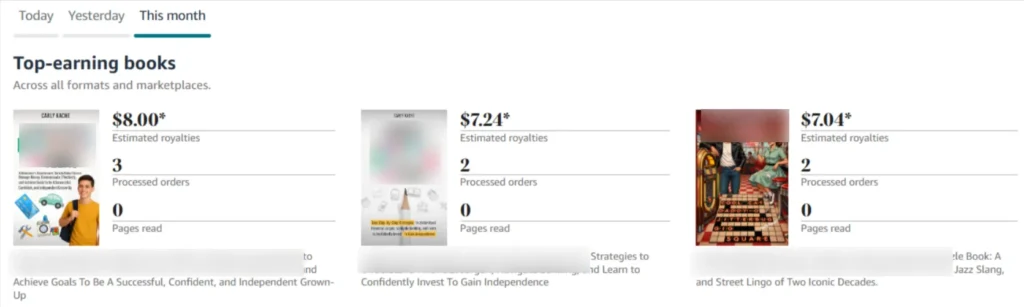
Another useful feature is the ability to customize generated pages.
NAZO BOX advertises editing controls for titles, story text, pictures, captions and other page elements.
Users can also move, resize and format elements to create a layout that better suits their publishing concept.
Additionally, the software allows users to insert different page types, including:
- Text pages.
- Image pages.
- Notes pages.
- Blank pages.
This is useful because a complete puzzle book generally needs more than puzzle pages.
You may want to include a title page, instructions, character introductions, case descriptions and answer sections.
Having the ability to add these pages inside the same application could reduce the need to move between multiple editing tools.
Still, I recommend reviewing the typography, spacing, alignment and readability of every page before exporting.
4.5 PDF, PNG and JPG Exports
Export functionality is another important consideration when evaluating publishing software.
NAZO BOX advertises three export formats.
PDF export
The PDF option is intended for creating complete book interiors. The promotional page describes these files as print-ready and specifies up to 100 PDF exports per month.
This is the most relevant format for publishers preparing interior files for Amazon KDP.
PNG export
PNG files can be useful for individual puzzle pages, promotional graphics, digital products and other visual content.
JPG export
JPG exports provide another option for saving individual pages as images.
You could use these image files for promotional materials, Etsy listings or website content.
The availability of different formats gives users more flexibility than a workflow that only produces one complete PDF.
However, make sure you understand the monthly PDF allowance before purchasing, particularly if you intend to create and export a large number of books.
5. How to Create a Puzzle Book With NAZO BOX
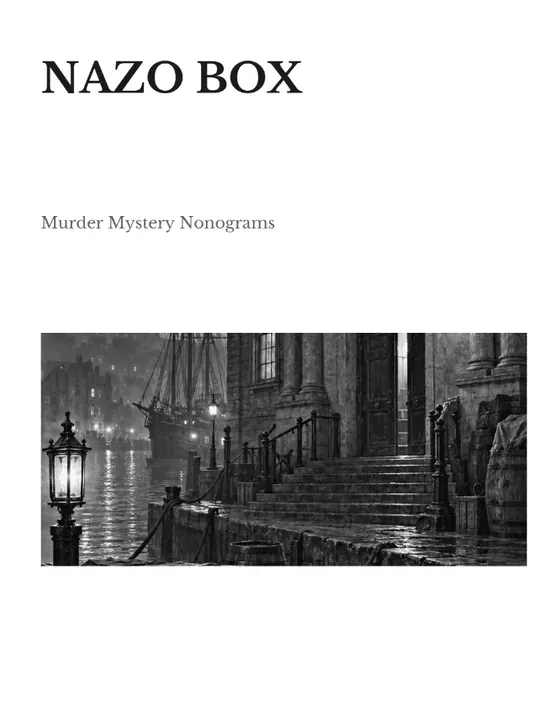
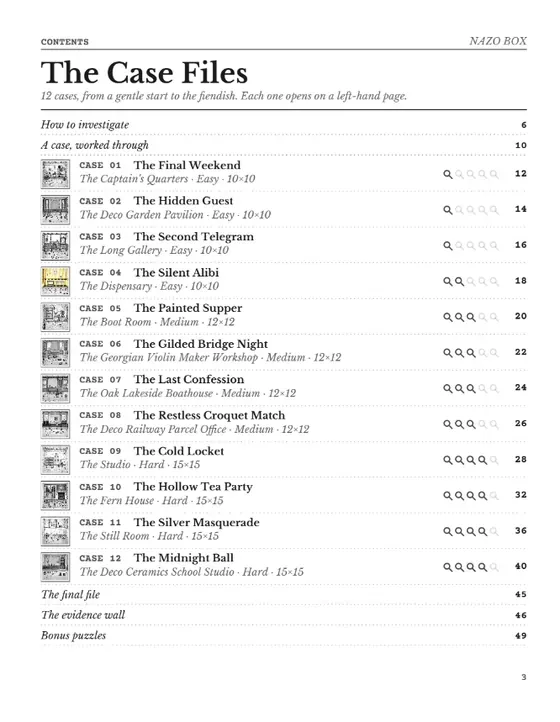
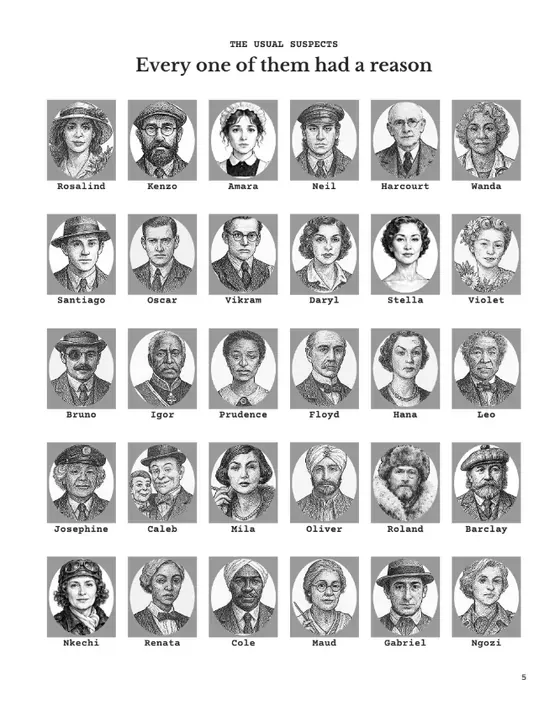
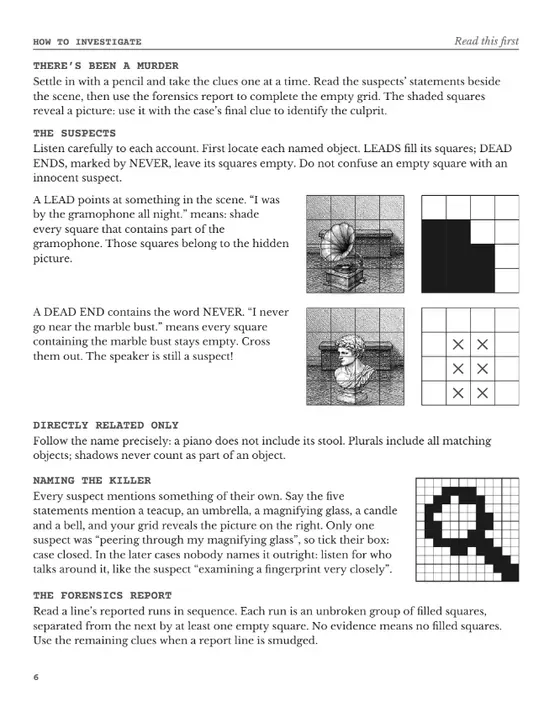
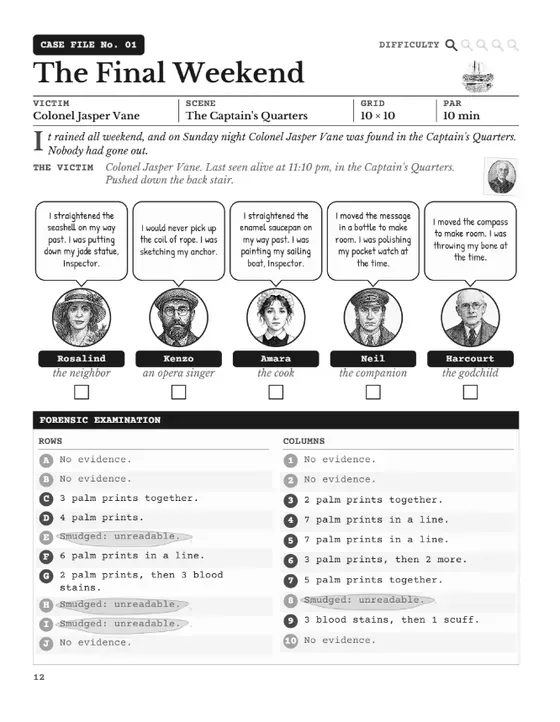
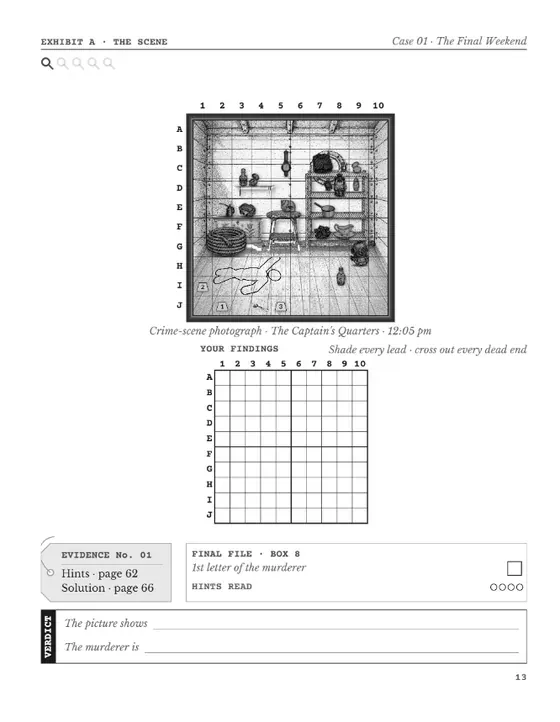
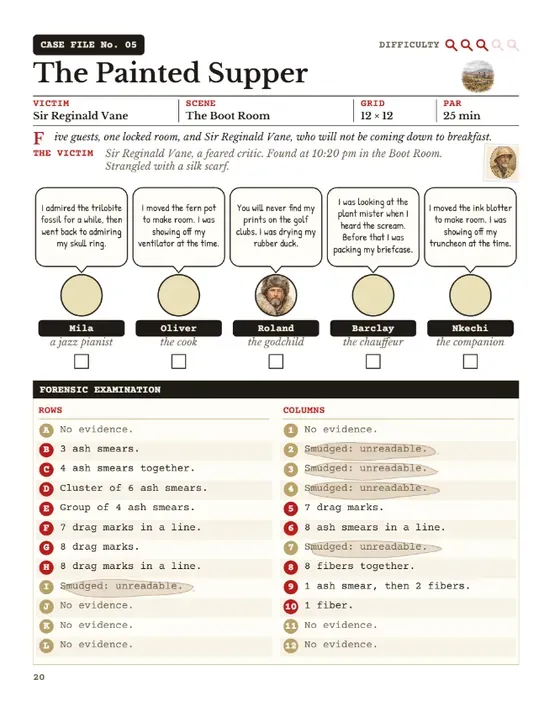
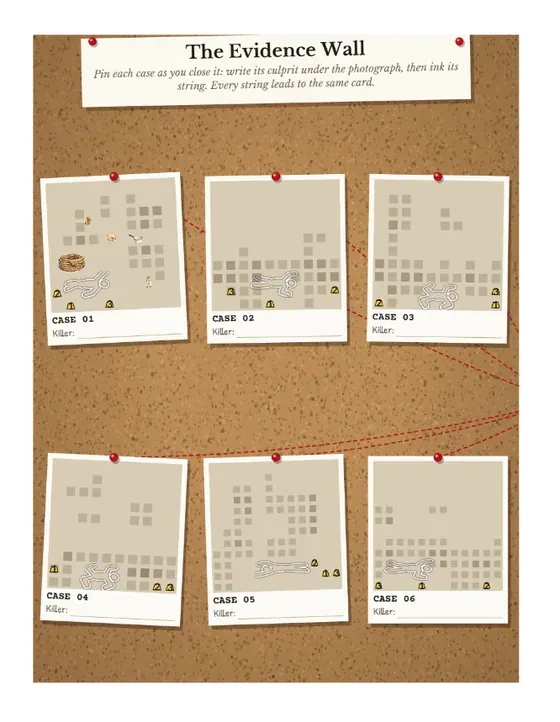
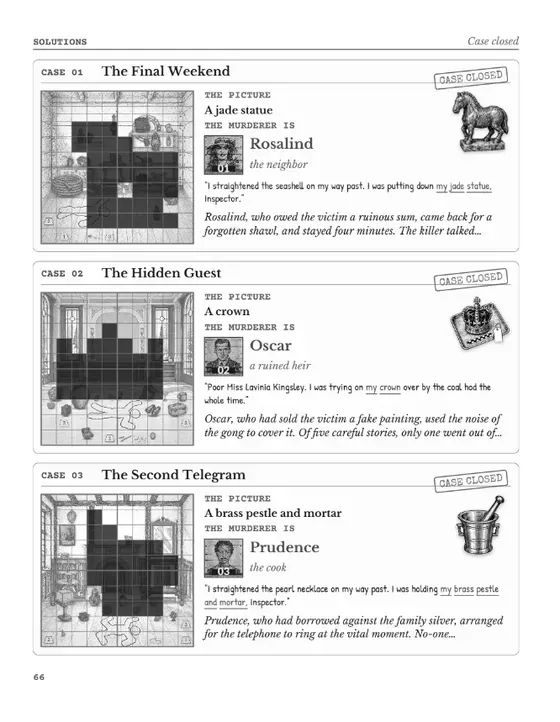
If you’re new to puzzle book publishing, the following workflow provides an idea of how you could use NAZO BOX to develop your first murder mystery puzzle book.
Step 1: Choose Your Book Concept
Before opening the software, decide what kind of book you want to create.
For example, you could develop:
- A classic murder mystery puzzle collection.
- A beginner-friendly nonogram puzzle book.
- A challenging detective puzzle series.
- A seasonal mystery activity book.
- A large-print puzzle book.
Having a clear theme can make it easier to organize your content and create a consistent experience for readers.
Step 2: Select Difficulty and Layout
Open NAZO BOX and choose the difficulty level, page size and preferred layout.
Consider your target audience when selecting the settings. Beginners may appreciate smaller grids and easier puzzles, while experienced puzzle enthusiasts may prefer more challenging layouts.
You can also decide whether to place one or two cases on each page.
Step 3: Generate Your Puzzles
Click Build Book to start the generation process.
The software is designed to generate picture-logic puzzles, calculate their numerical clues and perform automatic solution verification.
It also adds mystery-related story elements to the generated puzzles.
The promotional demonstration shows a project containing 12 cases and 82 pages. Your actual output may differ depending on your settings.
Step 4: Review and Customize the Pages
Once the book is generated, go through the pages carefully.
Change titles, rewrite story descriptions, adjust pictures and reposition elements where necessary.
You can also add introductory instructions, notes pages and answer sections.
This is an important stage because a book should feel consistent and professionally prepared rather than simply looking like automatically generated content.
Step 5: Save Your Project
NAZO BOX includes a personal book library where you can save projects and reopen them later.
This is useful if you want to develop a series of related puzzle books or update an existing publication.
Step 6: Export and Prepare for Publishing
When you’re satisfied with the interior, export the project as a PDF.
You can also export individual pages in PNG or JPG format.
Before uploading to Amazon KDP, check:
- Page dimensions and trim size.
- Interior margins and alignment.
- Text readability.
- Puzzle clarity.
- Answer key accuracy.
- Page order and numbering.
- Overall print quality.
You should also create a suitable book cover, write an informative product description and research relevant Amazon keywords.
NAZO BOX can assist with the interior creation process, but publishing and marketing still require your involvement.
6. NAZO BOX Bonuses Explained
One attractive part of the NAZO BOX promotional offer is its collection of five additional software tools.
According to the sales page, these are browser-based tools included as launch bonuses rather than ordinary PDF guides or training documents.
Let’s look at what each bonus is intended to do.
Bonus 1: PDF Page Mover
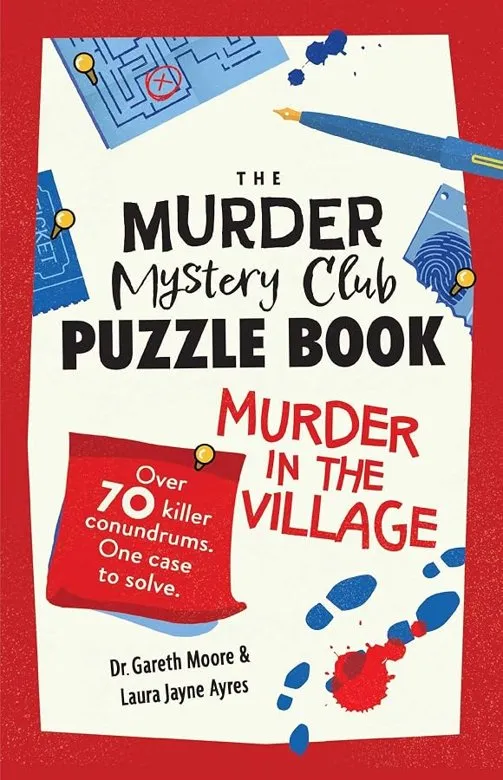
PDF Page Mover is designed to help users manage PDF documents.
Its advertised functions include:
- Reordering PDF pages.
- Removing unwanted pages.
- Merging pages or documents.
This could be helpful when you need to rearrange the interior of a puzzle book after exporting it.
For example, you might want to move the answer section to the end or remove an unnecessary page before uploading the final document.
Bonus 2: KDP Keyword Finder
Keyword research is an important part of Amazon KDP publishing.
Even a well-designed puzzle book needs to be discoverable by potential customers.
The KDP Keyword Finder is advertised as a tool for finding search phrases that buyers use on Amazon.
You can use keyword ideas when planning your book title, subtitle and the available keyword fields in your KDP listing.
However, keyword suggestions should be treated as research starting points. You still need to evaluate relevance, competition and buyer intent.
Bonus 3: Description Helper
Writing an effective product description can be difficult, particularly for beginners.
The Description Helper is designed to turn basic book information into a formatted listing description.
For example, you could provide details about your murder mystery puzzle collection, its difficulty level and the type of reader it targets.
The tool can then help organize those details into a more structured description.
I would still recommend editing the generated copy to make sure it accurately represents your book and avoids exaggerated claims.
Bonus 4: QR Book Generator
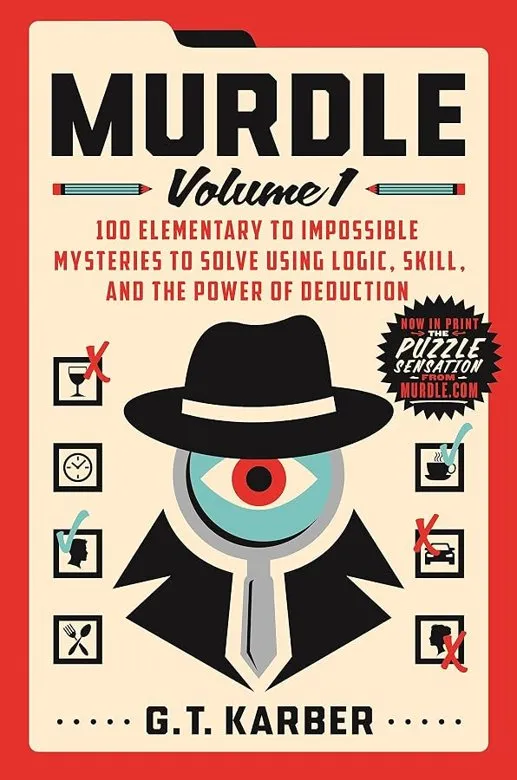
The QR Book Generator is intended to create QR codes that can be added to puzzle book pages.
According to the promotional material, these codes can be used for scan-to-solve or scan-for-answers experiences.
This could provide another way to connect printed puzzle books with digital resources.
Before including QR codes in a published book, test every code using multiple devices to ensure that the destination works correctly.
Bonus 5: Amazon KDP Research Tool and Niche Revealer
Researching a book idea before spending time creating it is essential.
This bonus is advertised as a tool for exploring Amazon KDP niches, identifying selling opportunities and examining competition.
For example, you might use it when comparing different puzzle book concepts or deciding which audience to target.
However, no niche research tool can guarantee that a book will sell. Always conduct your own market research before investing significant time in a publishing project.
My thoughts on the bonuses: These five tools cover several tasks beyond puzzle generation, including PDF management, keyword research, listing descriptions, QR codes and niche research. Their practical value depends on how well they work and how often you need those functions. Check their availability and access conditions at checkout.
7. NAZO BOX Pricing and Purchase Details
NAZO BOX Pricing is an important consideration when evaluating any software, especially if you’re starting a new publishing project.
The NAZO BOX sales material promotes a one-time payment rather than a recurring monthly subscription.
The official offer information currently available advertises an entry-level launch price of approximately $21. Promotional pricing can change, so treat this as a reference rather than a guaranteed checkout price. Picture Puzzles Solve Crimes+1
What Is Included in the Main Package?
The advertised package includes:
- Picture-logic puzzle generation.
- Automatic puzzle verification.
- Difficulty and layout controls.
- Murder mystery story elements.
- Page editing and customization.
- Additional page insertion.
- Personal book library.
- PNG and JPG exports.
- PDF exports.
- Commercial rights for created books.
- Training videos.
- Member support.
The main limitation worth highlighting is the monthly PDF export allowance.
The sales page specifies up to 100 PDF exports per month on the advertised front-end plan.
This should be sufficient for many beginners, but publishers planning high-volume production may need to consider their requirements carefully.
Are There Any Monthly Fees?
The vendor advertises the main package as a one-time purchase with no recurring fees.
That means you should not expect a standard monthly subscription charge for the advertised front-end package.
However, additional products or upgrades may be offered separately. Always check the checkout page to understand what you’re purchasing.
What About the Refund Policy?
This is one area where buyers should pay particular attention.
The supplied promotional page explicitly states that all sales are final.
It does not advertise a standard 14-day or 30-day money-back guarantee.
Therefore, I would not recommend purchasing NAZO BOX based on an assumption that you can request a refund if you change your mind.
Watch the demonstration, examine the available sample pages and read the purchase conditions before placing your order.
Where Can You Purchase NAZO BOX?
You can review the product and its current purchase information through the official website:NAZO BOX Official Website
Check the final checkout amount, currency, package contents, export restrictions and applicable terms before completing your purchase.
8. Pros and Cons of NAZO BOX
No software is perfect for every user. Before purchasing NAZO BOX, it’s worth looking at both its advantages and limitations.
Pros of NAZO BOX
1. Specialized puzzle book creation
NAZO BOX focuses on murder mystery nonogram books rather than offering only generic word search or Sudoku creation. This gives publishers another format to explore.
2. Automatic puzzle verification
The advertised verification engine checks whether generated puzzles have exactly one solution. This could reduce the manual work involved in checking individual puzzles.
3. No advanced puzzle skills required
The software is designed to handle puzzle generation and numerical clue creation. Beginners do not need to calculate every row and column manually.
4. Customizable book layouts
You can edit titles, story text, pictures and other page elements. You can also move and resize components to adjust the appearance of your book.
5. Multiple export formats
PDF, PNG and JPG exports provide flexibility for print publishing and other promotional uses.
6. Commercial rights advertised
The vendor states that users receive commercial rights to books created with the software. This is useful for people planning to sell their work through Amazon KDP, Etsy or their own websites. Review the actual licence before commercial use.
7. No recurring fee on the advertised plan
The one-time payment structure may appeal to publishers who prefer avoiding another monthly software subscription.
8. Additional publishing tools
The five advertised bonuses cover several supporting activities, including keyword research, PDF management and listing descriptions.
9. Project library
The ability to save and reopen projects makes it easier to update existing books and develop a collection over time.
Cons of NAZO BOX
1. All sales are final
The promotional page states that all sales are final. Buyers should carefully evaluate the offer before purchasing.
2. Monthly PDF export restriction
The front-end plan advertises up to 100 PDF exports per month. High-volume publishers may find this restriction limiting.
3. Human editing is still necessary
Automatic generation does not mean every page is ready for immediate publication. You should inspect the story content, layout, instructions and puzzle presentation.
4. No guaranteed publishing income
NAZO BOX does not guarantee Amazon KDP sales, royalties or business success. Your results depend on book quality, market demand, competition, pricing and promotion.
5. Cover design requires attention
The supplied front-end feature list focuses primarily on interior creation. You should confirm whether a cover-design feature is included in your package rather than assuming it is.
6. Specialized product category
NAZO BOX is designed around murder mystery nonogram books. If your main interest is creating coloring books, Sudoku collections or conventional word searches, it may not be the right software.
9. Who Should Use NAZO BOX?
NAZO BOX is not necessarily suitable for every digital publisher. Its usefulness depends on the type of content you want to create.
Here are some potential users who may benefit from exploring it.
Amazon KDP Beginners
If you’re interested in publishing activity books but don’t have experience designing nonogram puzzles, NAZO BOX could provide a starting point.
Its automated generation and editing workflow may make the technical side of puzzle creation more approachable.
You will still need to learn Amazon KDP publishing, keyword research, cover preparation and product listing optimization.
Existing Puzzle Book Publishers
If you already publish word searches, Sudoku or other activity books, you might be interested in adding a different puzzle format to your catalog.
Murder mystery nonograms could give you another publishing concept to test.
Rather than relying entirely on one type of activity book, you could explore different reader interests.
Etsy Digital Product Sellers
The advertised PNG and JPG exports could be useful for creating digital puzzle materials.
For example, you might consider developing downloadable puzzle activities or printable mystery challenges.
Before selling, review the commercial licence and ensure that your exported materials meet the requirements of your chosen marketplace.
Mystery and Puzzle Enthusiasts
People who enjoy detective stories and logic puzzles may appreciate the idea of combining both interests into a single publishing project.
You could develop themed collections around fictional investigations, missing objects or mysterious incidents.
Existing Digital Product Creators
If you already create downloadable products, NAZO BOX could offer another type of content to add to your portfolio.
Its project library and editing tools may be useful when developing multiple editions.
Who Should Avoid NAZO BOX?
There are also situations where I would not recommend purchasing it.
- People looking for guaranteed passive income.
- Publishers who want completely finished books without reviewing anything.
- Users who only want traditional coloring or Sudoku software.
- People who require a refund guarantee.
- Publishers who regularly need more than the advertised monthly PDF export allowance and do not want an upgrade.
Understanding these limitations can help you make a more informed buying decision.
10. Is NAZO BOX Worth Buying in 2026?
Now comes the most important question in this NAZO BOX Review: Is the software worth the investment?
My answer is that it could be worthwhile for the right type of publisher, particularly someone interested in creating murder mystery nonogram books.
The main attraction is the combination of puzzle generation, automatic solution checking, story elements and page editing.
Normally, creating a picture-logic puzzle book involves several separate activities.
You need to develop the puzzle images, calculate numerical clues, check whether the puzzles work, organize the pages and prepare the final document.
NAZO BOX is designed to bring these activities together.
That could save time compared with building every puzzle and page manually.
However, there are several considerations I would evaluate before purchasing.
Consider the Type of Books You Want to Publish
If your goal is to create murder mystery puzzle books, the software has a clear purpose.
If you want a general-purpose book creation application, you may find its specialized functionality restrictive.
Consider the Export Allowance
The 100-PDF-per-month limit is important.
For someone publishing a few books, it may be sufficient.
For someone planning a larger publishing operation, the allowance deserves more attention.
Consider the Refund Policy
Since the supplied offer states that all sales are final, you should examine the product demonstration and purchase terms carefully.
Do not buy simply because a promotional countdown timer is displayed.
Consider Your Marketing Strategy
One of the biggest misconceptions about Amazon KDP is that uploading a book automatically generates sales.
That isn’t how publishing works.
You need to research relevant keywords, create attractive covers, understand reader preferences and develop a strategy for attracting customers.
NAZO BOX can help with content production, but it cannot replace a proper publishing and marketing plan.
My Overall Assessment
I see NAZO BOX as a specialized production tool rather than a complete Amazon KDP business solution.
Its strongest advertised features are its picture-logic engine, automatic puzzle verification, editable layouts and multiple export formats.
The biggest drawbacks are the no-refund policy, monthly PDF export allowance and the need for human quality control.
If these limitations are acceptable and you genuinely want to experiment with murder mystery puzzle books, it is worth examining the offer.
11. Final Verdict: Should You Buy NAZO BOX?
After examining the advertised features, workflow, bonuses, pricing structure and limitations, I believe NAZO BOX offers an interesting approach to puzzle book creation.
Its main difference is the combination of nonogram puzzles and murder mystery storytelling.
Rather than creating another ordinary activity book, users can develop picture-based detective puzzles in which readers uncover clues by solving numerical grids.
The automatic puzzle verification feature is particularly interesting because puzzle accuracy is important when creating books intended for customers.
I also like the flexibility offered by its editing tools, project library and different export formats.
The five advertised bonuses provide additional tools for handling publishing-related tasks, including keyword research, PDF management and listing descriptions.
However, I would not describe NAZO BOX as a guaranteed money-making opportunity.
Buying the software is only one part of the publishing process. You still need to create quality books, research your audience, prepare attractive covers, follow Amazon KDP requirements and promote your publications.
The all-sales-final policy is another important consideration. Make sure you understand what you’re purchasing before placing an order.
My NAZO BOX Review Summary
Product category
Puzzle book creation software
Main purpose
Murder mystery nonograms
Export formats
PDF, PNG and JPG
Payment model
One-time payment advertised
Refund policy
All sales final
Best suited for
Puzzle book publishers
My Recommendation
If you’re a beginner interested in Amazon KDP or an existing publisher looking for a different puzzle book format, NAZO BOX is worth considering.
I would particularly recommend examining its live demonstration and sample pages before purchasing.
If you expect software alone to generate sales without research, editing or marketing, this is probably not the right investment.
But if you want a specialized tool to help create murder mystery nonogram books and are prepared to handle the publishing work yourself, NAZO BOX could be a useful addition to your toolkit.
Ready to Explore NAZO BOX?
If you want to see how the software works, check the official offer below.
Explore NAZO BOX Official Offer
Discover the puzzle creation features, editing options, export formats and included launch bonuses.Visit NAZO BOX Official Website
Check the current checkout price, package details and purchase conditions before ordering.
Affiliate disclosure: This article may contain affiliate links. If you purchase through an affiliate link, I may receive a commission at no additional cost to you. This does not change my responsibility to provide an honest review.
Frequently Asked Questions About NAZO BOX
1. What is NAZO BOX?
NAZO BOX is software designed to create murder mystery nonogram puzzle books. It combines picture-logic puzzle generation, solution verification, mystery story elements and book editing tools.
2. Is NAZO BOX suitable for beginners?
The software is designed to simplify puzzle creation. Beginners can use its generation and editing workflow without manually calculating every puzzle clue. However, some knowledge of book publishing is still useful.
3. Can I use NAZO BOX for Amazon KDP?
The software advertises print-ready PDF exports intended for Amazon KDP publishing. You must still review the interior and follow Amazon’s current publishing requirements.
4. Does NAZO BOX automatically create puzzles?
According to the vendor, yes. Its picture-logic engine generates images, calculates numerical clues and checks whether each puzzle has exactly one solution.
5. What export formats does NAZO BOX support?
The advertised formats are PDF, PNG and JPG. PDF is intended for complete book interiors, while PNG and JPG can be used for individual pages.
6. Are there monthly fees?
The advertised front-end package uses a one-time payment model without recurring subscription fees. Confirm the terms at checkout.
7. Does NAZO BOX include commercial rights?
The vendor advertises full commercial rights for books created with the software. Review the licence for the exact permissions and restrictions.
8. How many PDFs can I export?
The supplied promotional page advertises up to 100 PDF exports per month on the front-end plan.
9. Does NAZO BOX offer a money-back guarantee?
The supplied sales page states that all sales are final. It does not advertise a standard money-back guarantee.
10. Can NAZO BOX guarantee Amazon KDP sales?
No. The software helps create puzzle books, but it cannot guarantee sales, rankings or royalties. Commercial results depend on product quality, demand, competition, pricing and marketing.
Final publishing note: The article is based on the supplied NAZO BOX sales-page information and available official product information, not an independent hands-on test. Pricing and promotional terms can change.